


Every manufacturer relies on physical equipment to generate revenue. CNC machines, presses, welders, vehicles, and even the buildings they occupy are all fixed assets, and every one of them carries a depreciation schedule, an insurance obligation, and a compliance requirement. Fixed asset management is the discipline that ties all of these together. When it works well, audits are uneventful, capital planning is strategic, and insurance coverage matches reality. When it fails, the consequences are severe: denied claims, compliance penalties, inflated tax liabilities, and financial statements that don’t reflect what’s actually on the shop floor.
The problem is that most manufacturers have outgrown the tools they use to manage these assets. This guide consolidates everything discrete manufacturers need to understand about fixed asset management and what happens when it breaks down.
Fixed assets, also known as capital assets, are physical assets a manufacturer owns and uses to generate income. They include machinery, buildings, vehicles, furniture, and land. Unlike current assets such as inventory or cash, fixed assets are held for more than one accounting year and are subject to depreciation over time.
Fixed asset management is the process of monitoring each stage of an asset’s lifecycle, from acquisition through transfer, revaluation, impairment, and disposal. It encompasses tracking asset locations, calculating depreciation accurately, scheduling maintenance, ensuring regulatory compliance, and supporting insurance documentation. Dedicated software solutions accomplish this through methods including barcodes and RFID tags, providing real-time data on purchase date, cost, depreciation rate, location, and condition.
u0022Fixed assets should not be mistaken for current assets, like inventory or cash. Fixed assets are your company's infrastructure and are typically held for more than one accounting year.u0022
Edward Szukalo,
General Manager, IndustriOS Software
For a deeper explanation of terminology, asset types, market trends, and four actionable steps to improve your process, read our complete breakdown: [Fixed Asset Management: What It Is and How You Can Manage It Effectively].
The most vivid illustration of what poor fixed asset management costs a company comes from Universal Stenciling & Marking Systems, a century-old family manufacturer. During a routine audit in 2004, Executive Vice-President Karen Surdyk discovered that the company’s scattered asset records threatened their insurance coverage, tax compliance, and operational efficiency. Equipment was scattered across different areas without proper documentation, and inventory records didn’t match actual assets.
u0022When they asked for comprehensive asset tracking, we realized how vulnerable we were,u0022
Karen Surdyk,
Executive Vice-President, Universal Stenciling u0026 Marking Systems
The auditor’s simple request for documentation exposed gaps that could have devastated the business. Insurance companies require comprehensive asset documentation for claims processing. Without proper records, legitimate claims can be denied or significantly reduced. Industry analysis shows manufacturers with inadequate asset documentation receive 30 to 40 percent less than their requested insurance settlements on average. Tax compliance becomes impossible when depreciation schedules don’t match actual assets, and discrepancies can trigger IRS audits, penalties, and disallowed deductions.
Universal Stenciling ultimately resolved these challenges by implementing integrated systems, achieving 90 percent same-day order fulfillment and managing over 3,000 raw materials with precision while growing substantially and reducing headcount through streamlined processes. Their full story is a cautionary tale and a roadmap: [Manufacturing Asset Management: How Scattered Records Nearly Cost Universal Stenciling Their Bottom Line].
Much of the fixed asset management crisis traces back to Excel. According to a 2023 survey by the Institute of Management Accountants, finance professionals in asset-heavy industries spend an average of 20 or more hours per month on fixed asset reconciliation alone, verifying asset existence, recalculating depreciation, correcting entries, and preparing audit documentation. For mid-sized manufacturers operating across multiple plants, the number runs even higher.
Research by Dr. Raymond Panko at the University of Hawaii found that roughly 88 percent of spreadsheets contain errors, a figure drawn from over two decades of studies. For manufacturers, the fragility compounds because fixed asset data is never static. Depreciation methods change with regulatory updates, assets transfer between cost centers, and disposals happen on the shop floor weeks before finance hears about them. A spreadsheet cannot enforce workflow, trigger status alerts, or prevent two people from editing different versions simultaneously.
The consequences extend to ghost assets, items on the books that no longer physically exist. Ernst & Young has found that ghost assets represent 15 to 30 percent of a typical asset register. Each inflates insurance premiums, distorts depreciation expenses, and misrepresents financial position. Gartner estimates poor data quality costs organizations an average of $12.9 million per year, and fixed assets, often the largest line on a manufacturer’s balance sheet after inventory, represent a significant share of that exposure.
For a detailed look at why finance teams are abandoning spreadsheets and what signals it’s time to transition, see: Why Manufacturers Are Replacing Spreadsheets with Asset Management Software.
 Why Manufacturers Are Replacing Spreadsheets with Asset Management Software
Read Article →
Why Manufacturers Are Replacing Spreadsheets with Asset Management Software
Read Article →
There is a question every controller dreads during an external audit: “Can you walk me through how you arrived at this valuation?” What follows is rarely clean. Teams scramble through spreadsheets, chase down plant managers for photos, and try to reconstruct depreciation logic from memory.
The scrutiny on fixed asset valuations is intensifying. Under both GAAP and IFRS, auditors must verify that assets are stated at appropriate carrying values, that depreciation methods are applied consistently, and that impairment indicators have been evaluated. The PCAOB has repeatedly flagged asset valuation and existence testing as areas where audit procedures fall short. Asset-related deficiency rates in audit inspections have climbed steadily, from 26 percent in 2020 to 46 percent in 2024.
Common gaps that trigger findings include assets transferred between plants without updating the register, fully depreciated equipment still carried at residual book value, and capitalization threshold changes that were never applied retroactively. Individually, each is minor. Collectively, they erode auditor confidence and lead to expanded testing, higher fees, and delayed closes.
Asset tracking software solves this by maintaining a continuous record of every fixed asset, automating depreciation calculations, preserving a full audit trail of every change, and centralizing all supporting documents in one searchable location. For a complete guide on how to prepare for auditor scrutiny and eliminate valuation uncertainty, read: Asset Tracking Software: When Auditors Question Your Asset Valuation Methods.
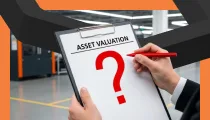 Asset Tracking Software: When Auditors Question Your Asset Valuation Methods
Read Article →
Asset Tracking Software: When Auditors Question Your Asset Valuation Methods
Read Article →
Fixed asset management doesn’t exist in isolation. It connects directly to scheduling, costing, maintenance, procurement, and strategic planning. When these connections are broken, manufacturers make decisions based on incomplete information.
Scheduling accuracy depends on understanding asset constraints. If your planning system doesn’t know which machines are available, approaching end-of-life, or scheduled for maintenance, production schedules become unreliable. True job cost must include asset depreciation. When finance calculates job profitability without accounting for the depreciation of the machines that produced the work, margins are overstated and pricing decisions suffer. Predictive maintenance programs improve asset lifespan, but only if there is a connected system tracking asset condition, maintenance history, and replacement cost against remaining useful life. Procurement strategy for new equipment should reference the performance and total cost of ownership data captured in your fixed asset management system. And ERP selection decisions must account for whether the platform supports robust fixed asset management or forces you into disconnected workarounds.
These cross-functional relationships explain why isolated spreadsheets fail. A fixed asset management system that integrates with scheduling, costing, and maintenance creates a single source of truth across departments.
The shift from manual to automated fixed asset management doesn’t need to be disruptive. The best solutions for manufacturers are built around several core principles: a single authoritative source for all asset data, automated depreciation calculations aligned with applicable accounting standards including GAAP, IFRS, and SOX requirements, a continuous audit trail, and shared visibility for both finance and operations teams.
Cloud-hosted solutions have made this especially accessible for mid-sized manufacturers without dedicated IT infrastructure. Automatic backups, enterprise-grade encryption, and device-agnostic access remove the traditional implementation friction. Tracking capabilities through barcodes and RFID tags provide real-time awareness of asset location and condition. Centralized document repositories store insurance policies, warranty certificates, lien documentation, and purchase invoices so that when an auditor or insurance carrier requests verification, the answer is seconds away rather than days.
Download the INDUSTRIOS Fixed Asset Management Brochure →
Manufacturers who treat fixed asset management as an administrative afterthought are accepting escalating financial risk. Equipment costs have risen 81 percent in two decades. Audit scrutiny increases every year. Insurance carriers demand better documentation. And the manual processes that worked when your company had fifty assets cannot scale to five hundred or five thousand.
The companies that act on this reality protect their margins, pass audits confidently, and make better capital decisions. Those that continue relying on spreadsheets and scattered records will eventually face the same crisis that nearly devastated Universal Stenciling, but without the guarantee of a successful outcome.

Download 1 of 11 Continuous
Improvement Templates