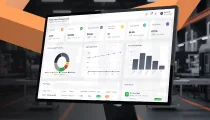


How APS transforms production planning from reactive firefighting into a system that drives measurable gains in lead time, on-time delivery, and operational efficiency.
APS replaces siloed spreadsheets and manual planning with a single, constraint-aware model that schedules materials, capacity, and labor simultaneously.
Manufacturers using APS consistently achieve 15 to 30% efficiency gains, up to 25% inventory reductions, and 95%+ on-time delivery rates.
APS becomes essential when planners spend more time gathering data than making decisions, and schedule breaks are a daily event.
INDUSTRIOS APS (powered by LOGIS) integrates directly with ERP to connect scheduling, capable-to-promise logic, and real-time shop floor data in one platform.
Advanced Planning & Scheduling is software that optimizes production scheduling, resource allocation, and material planning using intelligent algorithms and real-time data. It works alongside your ERP system, not instead of it, to turn planning from a static, manual exercise into a continuous, constraint-aware process.
Without APS, most manufacturers rely on some combination of MRP runs, standalone capacity tools, and spreadsheets held together by tribal knowledge. Material planning happens in one silo. Capacity planning happens in another. The “real” schedule lives in someone’s spreadsheet, and it’s outdated by noon.
APS replaces that patchwork with a single model of your plant that evaluates materials, machine capacity, labor, tooling, and order priorities simultaneously. The result is a schedule that’s feasible by design, not just in theory.
For a full primer on what APS systems do and how they integrate with ERP, read Introduction to Advanced Planning and Scheduling Systems.
 APS System: Introduction to Advanced Planning and Scheduling
Read Article →
APS System: Introduction to Advanced Planning and Scheduling
Read Article →
Not every manufacturer needs APS on day one. If your product mix is simple, your volume is steady, and your current tools keep up without constant firefighting, basic MRP and manual scheduling may still work.
APS becomes essential when you start hitting these triggers:
Planners spend more time gathering data than making decisions. If building a schedule requires stitching together three systems and five spreadsheets, planning itself has become the bottleneck.
Schedule breaks are a daily event. Rush orders, late materials, or machine downtime regularly invalidate the plan and send your team into reactive mode.
Delivery promises are unreliable. Sales commits dates based on rough estimates, Production can’t confirm them, and customers feel the gap.
Growth is exposing capacity blind spots. You’re winning more orders, but throughput isn’t scaling because constraints you can’t see are choking the shop floor.
Product complexity is increasing. Deep BOMs, custom configurations, or make-to-order workflows create interdependencies that manual methods can’t coordinate.
If two or more of these sound familiar, your operation has outgrown manual planning. The question now is how much longer can you afford not to move to an APS? For a closer look at what manufacturers face without APS and the core advantages it unlocks, read 9 Advanced Planning and Scheduling Benefits.
 9 Advanced Planning and Scheduling Benefits for Your Manufacturing Facility
Read Article →
9 Advanced Planning and Scheduling Benefits for Your Manufacturing Facility
Read Article →
Spreadsheets are where most manufacturers start with scheduling, and they work until they don’t. The gap between spreadsheet planning and APS isn’t about sophistication for its own sake. It’s about what happens when complexity outpaces what a static tool can manage.
| – | Spreadsheets | APS |
|---|---|---|
| Planning scope | Check material or capacity, but not both at once. | Evaluates materials, machine capacity, labor availability, tooling, and setup times in a single integrated model. Every schedule is feasible across all constraints simultaneously. |
| Responsiveness | Static snapshots. The moment conditions change, the plan is wrong. | Dynamically reschedules when a machine goes down, a rush order arrives, or materials are delayed, propagating changes across every affected order in seconds. |
| Scenario testing | Hours of manual rework to approximate a single “what if.” | Runs scenarios against real constraints and shows trade-offs instantly. |
| Bottleneck visibility | You discover constraints when production stalls. | Identifies bottlenecks before they impact output, sequences work to protect constrained resources, and gives planners weeks of advance visibility into capacity conflicts. |
| Sales-to-Production alignment | Promise dates based on rough estimates erode customer confidence. | Capable-to-promise logic gives Sales feasible dates based on actual capacity and material readiness, so every commitment reflects reality. |
The shift from spreadsheets to APS isn’t a technology upgrade. It’s moving from a planning process that reacts to problems to one that prevents them. For a deeper look at how APS handles dynamic rescheduling and finite capacity planning in practice, read APS Scheduling: Effective Manufacturing with INDUSTRIOS APS.
 APS Scheduling: Effective Manufacturing with INDUSTRIOS APS
Read Article →
APS Scheduling: Effective Manufacturing with INDUSTRIOS APS
Read Article →
APS scheduling accounts for machine capacities, workforce availability, material requirements, and delivery timelines in a single coordinated plan. Unlike basic scheduling tools, it enables both long-term planning across machine groups and short-term task allocation as deadlines approach.
When conditions change (equipment failures, last-minute orders, supply chain disruptions) APS dynamically reschedules in real time. The system can modify machine or department hours for any day or range of dates, adjusting without derailing the broader schedule. This eliminates the cycle of manual rework that buries planners in reactive firefighting.
Finite capacity planning ensures that schedules reflect actual machine and labor constraints, not theoretical availability. The result is optimized throughput, reduced overtime, and improved on-time delivery.
For the full breakdown of how INDUSTRIOS APS handles precision planning, dynamic rescheduling, and finite capacity scheduling, read APS Scheduling: Effective Manufacturing with INDUSTRIOS APS.
Traditional planning checks material, then capacity, then adjusts by hand. APS evaluates both in one integrated model, aligning machine, labor, and tooling availability with material readiness at every step. It considers deep BOMs, alternate resources, and realistic setup and changeover times, producing plans that are feasible by design.
Within INDUSTRIOS APS (powered by LOGIS), the Planning Desk serves as an interactive command center that pulls capacity, material availability, and order status into a single screen. Planners can run what-if scenarios, identify bottlenecks and shortages in seconds, and compare plans using KPIs like on-time delivery, bottleneck utilization, and WIP levels. All without living in spreadsheets.
This capability also drives real-time production synchronization across the shop floor, keeping work flowing steadily through bottleneck resources while reducing idle time at upstream and downstream operations.
For the full discussion of how simultaneous planning eliminates the spreadsheet shuffle, read Simultaneous Capacity and Material Planning.
 Simultaneous Capacity and Material Planning Without the Spreadsheet Shuffle
Read Article →
Simultaneous Capacity and Material Planning Without the Spreadsheet Shuffle
Read Article →
Every new order triggers the same question: “Can we actually ship this on time?” When promise dates are based on static lead-time tables and rough capacity assumptions, missed deadlines become a pattern. APS solves this through advanced constraint handling that goes beyond machine availability to include worker skills, secondary tooling, maintenance windows, and sequence-dependent setups.
With these constraints modeled, Capable-to-Promise becomes a powerful planning tool. When Sales enters a potential order, APS evaluates current and projected load across constrained resources, checks material availability and supplier lead times concurrently, and proposes feasible dates that balance throughput against existing commitments. Commitments are based on reality, not optimism.
Even after promise dates are set, interactive scheduling allows planners to adjust sequences when priorities shift. Every change propagates through the model to maintain synchronized, updated dates across all affected orders.
For the full framework on how APS delivers accurate promises through constraint handling and CTP logic, read Reliable Due Date Determination.
 Reliable Promise Date Determination Through Advanced Constraint Handling
Read Article →
Reliable Promise Date Determination Through Advanced Constraint Handling
Read Article →
AI and machine learning extend APS by analyzing large volumes of production history, machine performance, labor availability, and inventory data to make scheduling decisions that improve over time. Where traditional APS uses rule-based optimization, AI-driven scheduling can predict when equipment will need maintenance, identify resource allocation patterns humans miss, and adjust plans based on real-time conditions without manual intervention.
The practical benefits are direct: improved resource allocation during peak production, reduced unexpected downtime through predictive maintenance inputs, better supply chain coordination through real-time inventory tracking, and increased flexibility to absorb rush orders or demand shifts without destabilizing the schedule.
For a deeper look at how AI is transforming shop floor scheduling and where INDUSTRIOS fits, read AI in Production Scheduling.
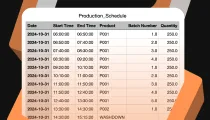 AI in Production Scheduling: Optimizing Efficiency on the Shop Floor
Read Article →
AI in Production Scheduling: Optimizing Efficiency on the Shop Floor
Read Article →
The case for APS isn’t theoretical. Manufacturers implementing APS through INDUSTRIOS consistently report measurable improvements across the metrics that matter most to operations leaders.
When orders are scheduled around real constraints rather than arbitrary dates, and materials are synchronized with capacity in a single plan, lead times compress. Jobs move through bottlenecks more efficiently, queue times shrink, and orders spend less time waiting for materials, machines, or decisions. The result is shorter, more predictable lead times without adding capacity or headcount.
APS implementations consistently deliver up to 25% inventory reductions by releasing jobs in alignment with actual capacity and material readiness. Fewer jobs sit half-finished waiting for missing components. Lower WIP means less cash tied up on the floor, less congestion, and easier visual management of the shop.
Schedule adherence is where APS shows the most dramatic results. Manufacturers routinely achieve 95% or higher adherence rates within months of deployment. This reliability cascades through the organization: more accurate customer commitments, reduced safety stock requirements, improved cash flow, and stronger customer relationships built on trust rather than apologies.
APS implementations deliver 15 to 30% production efficiency gains through better machine utilization, minimized setup and changeover times, and elimination of invisible bottlenecks. One machinery manufacturer reported a 22% improvement in overall equipment effectiveness (OEE) after implementing APS, driven by the elimination of guesswork from scheduling decisions.
These outcomes reinforce each other. Less WIP and better flow make it easier to keep promises. Reliable promises make demand more predictable. Predictable demand simplifies planning and further reduces WIP. The manufacturers who get the most from APS are the ones who understand this virtuous cycle.
For the full data on what manufacturers are achieving, read Real Results from Advanced Planning and Scheduling. For the complete breakdown of nine operational benefits, read 9 Advanced Planning and Scheduling Benefits.
 Real Results from Advanced Planning & Scheduling (APS) in Manufacturing
Read Article →
9 Advanced Planning and Scheduling Benefits for Your Manufacturing Facility
Read Article →
Real Results from Advanced Planning & Scheduling (APS) in Manufacturing
Read Article →
9 Advanced Planning and Scheduling Benefits for Your Manufacturing Facility
Read Article →
INDUSTRIOS APS, powered by LOGIS, integrates directly into the INDUSTRIOS ERP platform, connecting advanced scheduling logic with your system of record for orders, inventory, and financials. APS handles constraint modeling, scenario comparison, and scheduling optimization. ERP handles transactions, materials, and cost. Confirmed plans flow back into ERP so dates, priorities, and material plans stay aligned across the business.
This isn’t a bolt-on. It’s a unified environment where planners, production managers, and sales teams work from the same model of the plant. The Planning Desk provides the interactive command center. Real-time data feeds keep schedules current. And capable-to-promise logic gives Sales feasible commitments grounded in actual shop floor reality.
Whether you’re replacing spreadsheets for the first time or adding AI-driven capabilities to an existing planning process, INDUSTRIOS provides the infrastructure to move from reactive scheduling to proactive production control.

Download 1 of 11 Continuous
Improvement Templates