

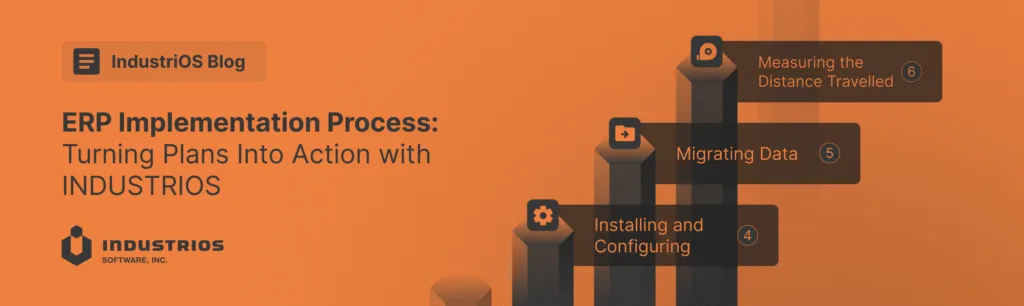
Today, we’ll move from strategy to reality, breaking down three crucial steps of the ERP implementation process: Installing and Configuring, Migrating Data, and Measuring the Distance Travelled. These steps are all about making progress you can see and measure.
It’s one thing to craft a great plan, but the ERP implementation process only truly starts when you put that plan into motion. The steps we’re covering today are where all that groundwork starts to pay off, turning good intentions into working systems.
“Getting it right now saves time and headaches later. The real action is where the project comes alive for users and the organization.”
Edward Szukalo,
General Manager, INDUSTRIOS Software Inc.
Let’s see why each of these steps is so essential, and how to get them right.
(Continuing From Our Last Blog Post)
 ERP Project Roadmap: Setting Your Project Up for Success with the First Three Stepping Stones
Read Article →
ERP Project Roadmap: Setting Your Project Up for Success with the First Three Stepping Stones
Read Article →
Think of this phase as building the stage before the show begins. Everything you learned about your business during earlier roadmap steps now gets translated into a working INDUSTRIOS environment tailored to your needs, not a generic setup, not a rushed job.
Inputs from your surveys, data reviews, and workflow mapping feed directly into system configuration:
User roles and access levels
Workflow rules and process routes
Reporting templates
Configuration isn’t the place for shortcuts or siloed improvisation. It’s about careful, task-by-task execution, balancing industry best practices with your distinct operations.
Best practice: Use a checklist, document every decision, and keep core team members involved. As Edward puts it, “Do it right here and you avoid a lot of headaches later.”
Data migration is where many ERP implementation processes succeed or fail. This is about cleaning up master records (part numbers, customers, vendors), validating existing data, and building a solid maintenance strategy.
You might import records for high-volume tables or enter unique items manually. Either way, don’t let this become a bottleneck or a black hole.
“We want a migration that’s thorough, but not paralyzing. Good prep here makes parallel training and go-live a lot smoother.”
The outcome of this stage? An INDUSTRIOS system ready for real transaction training, with clean, relevant information that fuels every process downstream.
It’s tempting to march ahead and check boxes, but lasting success in the ERP implementation process depends on honest, regular reflection.
“It’s as much about seeing how far you’ve come as it is about where you’re going next.”
Edward,
Measurement is the fuel for continuous improvement and a way to keep the atmosphere positive (and realistic).
Configuration, data migration, and measurement are the “action” steps that give your ERP project substance. The more effort and accountability you build here, the easier it is to train users, go live with confidence, and adjust as you grow.
Key advice:
Remember, a strong ERP implementation process sets the tone for years of reliable operations and improvement. Download the Stepping Stones brochure to see the complete framework behind a successful rollout.
 Stepping Stones
Read Article →
Stepping Stones
Read Article →
Our next post will be all about preparing your people, core team training, confirming your workflows, and effective end user onboarding. Stay tuned for more actionable advice from the INDUSTRIOS project roadmap series!

Download 1 of 11 Continuous
Improvement Templates