


We live, breathe, walk, speak, eat and sleep discrete manufacturing operations.
Let's talk shop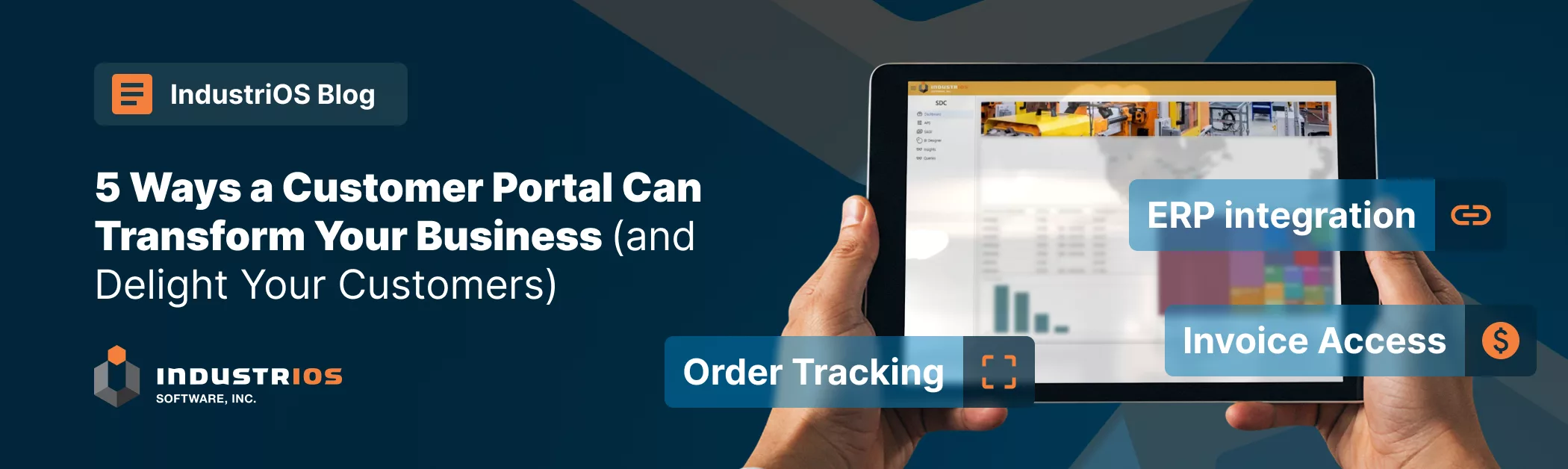
Digital solutions continue to shape industries, and manufacturers are adopting customer portals to improve their operations. These online platforms offer significant advantages for both companies and their clients. Below, we explore five key customer portal benefits and how they can transform manufacturing operations.
Lower support costs via self-service tools (FAQs, knowledge bases) reducing manual intervention.
Accelerated order processing through ERP integration, real-time validation, and error minimization.
24/7 account access for tracking, invoices, and returns management across time zones.
Personalized experiences using purchase history for recommendations and tailored dashboards.
Seamless system integration ensuring real-time inventory visibility and customer-specific pricing.
A customer portal is a centralized digital platform where customers can interact with a manufacturer’s systems to manage their accounts, place orders, track shipments, access invoices, and more. These portals integrate with back-end systems like ERP (Enterprise Resource Planning) and CRM (Customer Relationship Management) software to provide real-time data and self-service functionality. For manufacturers, this means reduced manual processes, improved operational efficiency, and enhanced customer satisfaction.
One of the most immediate benefits of a customer portal is its ability to lower support costs. By providing self-service tools such as FAQs, knowledge bases, and account management features, customers can resolve common issues independently. This allows support teams to focus on complex cases that require human expertise.
For example, IBM’s implementation of a self-service AI platform resulted in a significant reduction in call center traffic. This kind of reduction in manual intervention enables support teams to handle more complex issues efficiently.
Manual order processing often leads to delays and errors. A customer portal automates this process by integrating with ERP systems to handle orders in real-time. Customers can place orders online at their convenience, track progress, and receive automatic confirmations—all without needing to contact sales staff.
Key benefits include:
Real-time order validation:
Portals can verify inventory levels and enforce customer-specific pricing or business rules during the ordering process.
Reduced errors:
By eliminating manual data entry, portals minimize mistakes that could disrupt production schedules or delivery timelines.
Manufacturers often serve clients across multiple time zones, making it essential to provide round-the-clock access to critical information. A well-designed customer portal ensures customers can manage their accounts anytime, anywhere.
Features include:
Order tracking:
Customers can monitor their shipments in real-time and receive updates on production milestones or estimated delivery dates.
Invoice history:
Clients can access past invoices for easy reconciliation or payment processing.
Returns management:
Portals simplify the initiation of product returns or warranty claims without requiring direct contact with support teams.
A major strength of customer portals lies in their ability to integrate seamlessly with back-end systems like ERP, CRM, and inventory management platforms. This integration ensures data consistency across all systems while providing customers with up-to-date information.
Benefits include:
Real-time inventory visibility: Customers can see stock availability before placing orders, reducing out-of-stock issues.
Personalized pricing: Portals pull customer-specific pricing data directly from ERP systems, ensuring accurate quotes.
Improved operational efficiency: Automation reduces redundant tasks like manual data entry or status updates.
Customer portals offer opportunities for manufacturers to deliver personalized experiences based on user behavior, purchase history, or account preferences. Personalization not only improves user satisfaction but also drives loyalty and repeat business.
Examples of personalization include:
Product recommendations: Suggesting items based on previous purchases or frequently ordered products.
Custom dashboards: Displaying relevant metrics such as order history or pending invoices tailored to each user’s needs.
Targeted notifications: Sending alerts about restocked items or upcoming promotions relevant to specific customers.
Data-driven decision-making:
Portals collect data on customer interactions and preferences that can be analyzed for insights into improving products or services.
Improved security:
Integrated portals often feature robust encryption protocols to protect sensitive client information from unauthorized access.
Shorter quote-to-order times:
Automated workflows reduce delays between quoting and finalizing orders, speeding up revenue generation cycles.
Beyond these five core advantages, customer portals also provide other valuable benefits for manufacturers:
A customer portal is a tool that enhances operational efficiency while improving the overall customer experience. By reducing support costs, automating order processing, offering 24/7 access, integrating with core systems, and personalizing interactions, manufacturers can build stronger relationships with their clients while optimizing internal workflows.
While implementing a portal requires an upfront investment in technology and training, the long-term customer portal benefits—such as cost savings, increased productivity, and higher customer satisfaction—make it a worthwhile addition to any manufacturing business.
Ready to explore how a customer portal could benefit your specific business needs? Contact our team today for a personalized consultation and demonstration.
Download 1 of 11 Continuous
Improvement Templates